What are research peptides?
Introduce amino-acid chain structure, lyophilized formats, purity documentation, COAs, and why researchers evaluate peptides in controlled in-vitro settings.
A separate editorial home for peptide explainers, compound comparisons, handling notes, and research-use discussions. Built to grow into individual SEO pages for every peptide in the catalog.
These article starters target useful search intent while keeping the language educational and research-use focused.
Introduce amino-acid chain structure, lyophilized formats, purity documentation, COAs, and why researchers evaluate peptides in controlled in-vitro settings.
Explain identity, HPLC purity, lot numbers, third-party testing, and why documentation matters when comparing research peptide suppliers.
Short profile blocks give every peptide a search-friendly landing point before deeper standalone articles are added.
A research peptide often discussed in relation to multi-receptor metabolic pathway studies.
A synthetic peptide used in laboratory discussions around dual GIP and GLP-1 incretin pathway research.
A peptide frequently referenced in controlled research around GLP-1 receptor pathways and chronic weight management.
A peptide commonly discussed in preclinical and lab research contexts involving tissue-response pathways.
A thymosin beta-4 fragment studied in research settings tied to cell movement and repair models.
A copper-binding peptide often explored in research related to skin, extracellular matrix, and signaling models.
A mitochondrial-derived peptide used in laboratory discussions around cellular metabolism and stress response.
A peptide analog often covered in research conversations around growth-hormone releasing pathways.
A nucleotide coenzyme studied in laboratory settings related to energy metabolism and cellular redox systems.
A synthetic peptide, also known as Bremelanotide, studied for central nervous system pathways connected to libido and arousal signaling.
A focused overview of Body Protection Compound research, tissue repair pathways, gut lining protection, angiogenesis, and inflammation modulation.
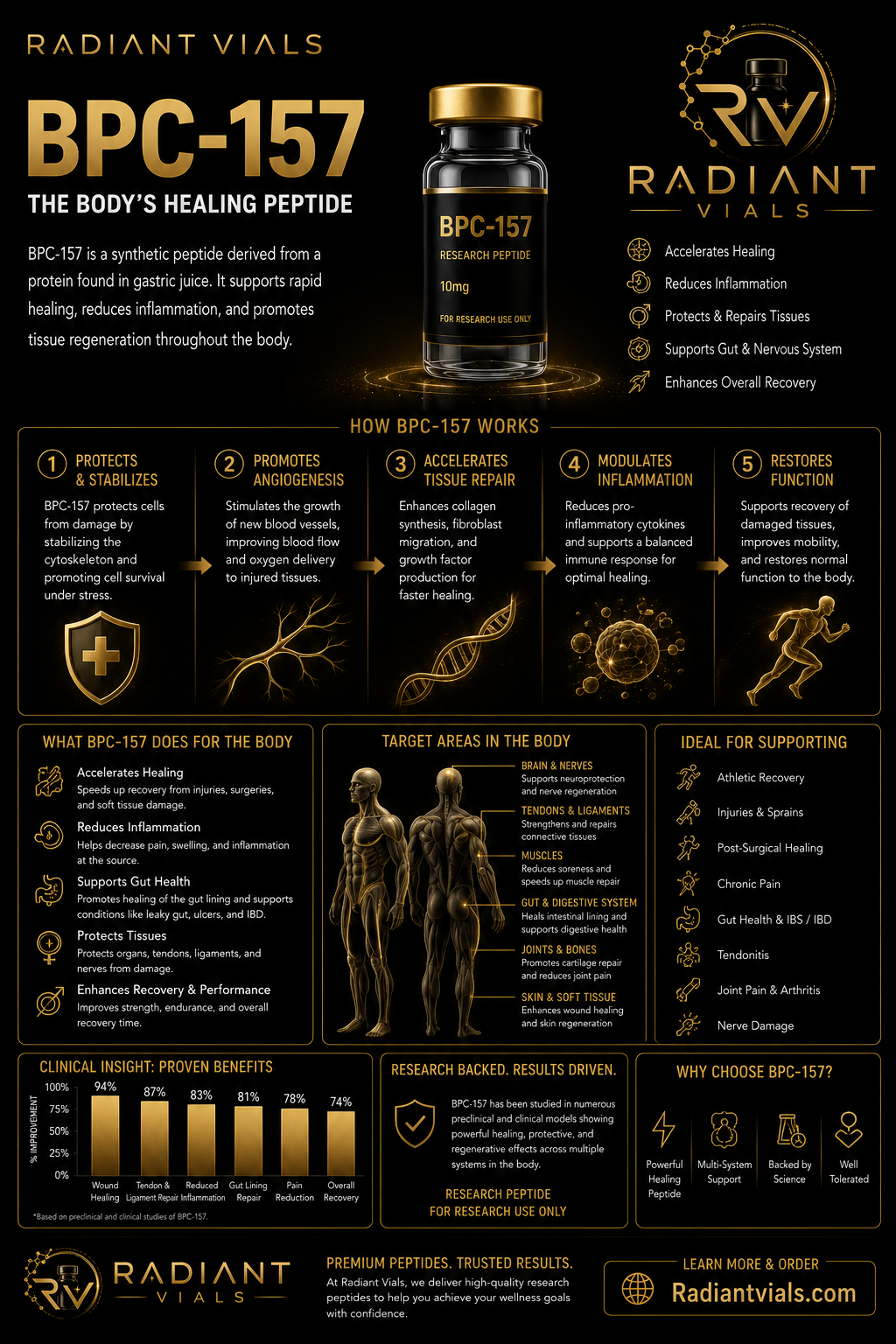
A stubborn joint ache, nagging tendon strain, or uncomfortable digestive system can make recovery feel stuck in slow motion. BPC-157 is one of the most discussed compounds in wellness and athletic optimization because it is associated with cellular-level repair pathways.
BPC stands for Body Protection Compound. It is a peptide, or short chain of amino acids, made from a precise 15-amino-acid sequence derived from a protective protein naturally found in human gastric juice.
While the stomach uses related protective proteins to help maintain its own lining, researchers have explored this specific peptide sequence for systemic tissue-response signaling throughout the body.
Tendons and ligaments naturally have limited blood supply, which is one reason sprains, strains, and tendon irritation can take a long time to normalize. BPC-157 is commonly discussed in relation to angiogenesis, the formation of new blood vessels, which can improve delivery of oxygen and nutrients to injured tissue models.
Because the compound is connected to gastric protective proteins, BPC-157 is often discussed for gastrointestinal barrier research. It is associated with models involving gut lining integrity, NSAID-related irritation, systemic inflammation, and nutrient absorption.
Rather than simply shutting down the inflammatory response, BPC-157 is discussed for modulation of the inflammatory cascade while supporting cellular regeneration and tissue remodeling pathways.
Research discussions often connect BPC-157 with tennis elbow, golfer's elbow, rotator cuff irritation, Achilles tendonitis, pulled muscles, and minor ligament strains because those tissue types can be slow to repair.
Your body is resilient, but targeted biochemical signaling is one reason BPC-157 receives attention in recovery, gut barrier, and tissue-protection conversations.
This article is educational and research-focused. It is not medical advice, dosing guidance, or a recommendation for personal use. Always consult with a qualified healthcare professional before introducing new peptides or supplements into a personal routine.
A focused overview of GLP-1 receptor agonist activity, appetite signaling, digestion timing, and blood sugar management.
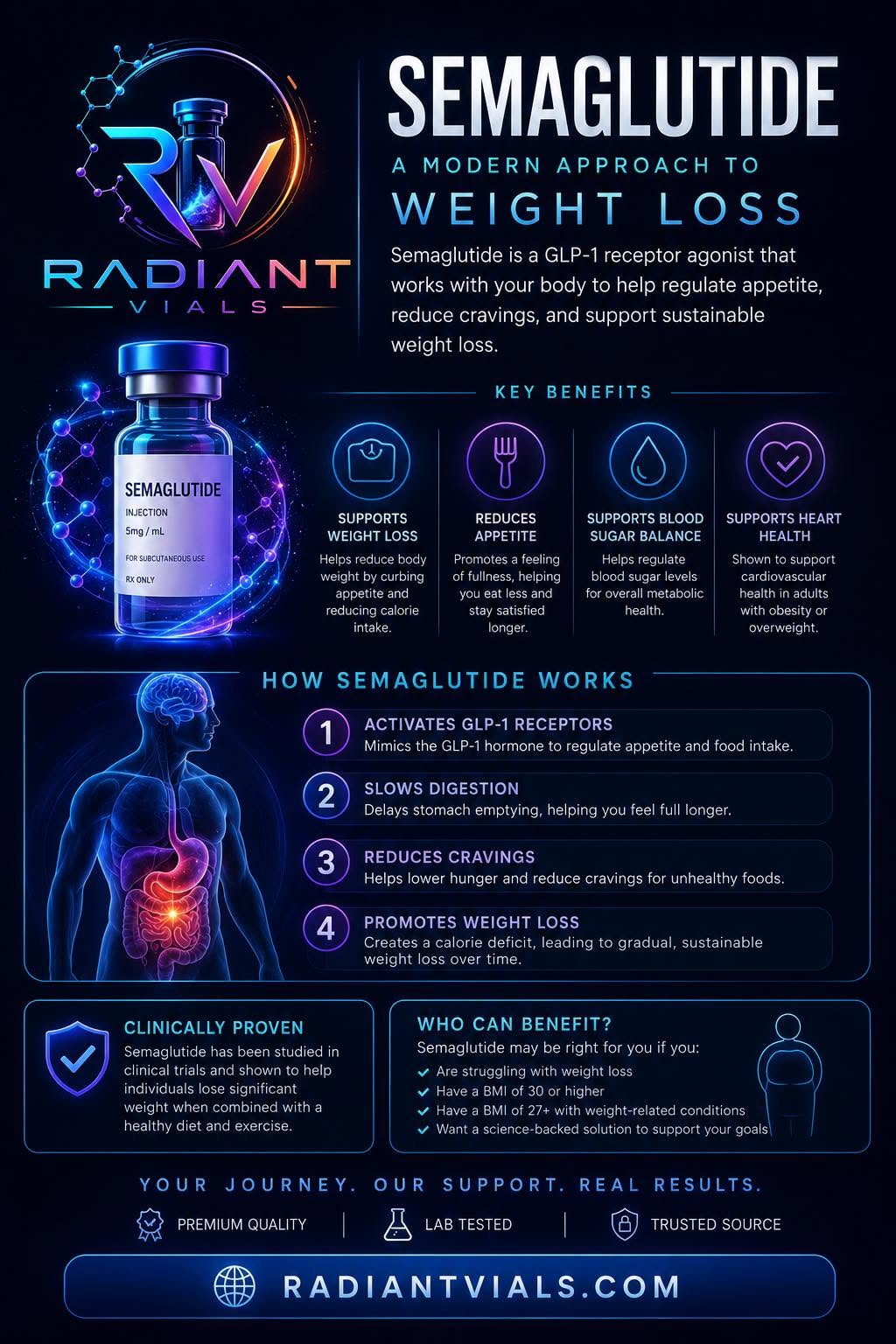
Semaglutide is a medication that has gained significant attention for its high efficacy in chronic weight management. Originally developed to treat type 2 diabetes, it belongs to a class of drugs known as GLP-1 receptor agonists.
Semaglutide works by mimicking a natural hormone in the body called GLP-1, or glucagon-like peptide-1, which is normally released by the gut after eating. It targets weight loss through three main mechanisms.
It acts directly on hunger centers of the brain, including the hypothalamus, to suppress appetite and significantly reduce intense food cravings, often described as food noise.
It slows the rate at which the stomach empties its contents. This physical delay can help people feel full and satisfied longer after a meal, naturally leading to smaller portions and lower overall calorie intake.
It stimulates insulin secretion and lowers glucagon levels in a glucose-dependent manner, helping stabilize blood sugar and reduce the energy crashes that can trigger overeating.
For those looking to source this peptide, it is available for purchase online at RadiantVials.com.
Because Semaglutide is a powerful metabolic modifier, it is highly recommended to consult with a healthcare professional to guide dosage protocol and confirm that use aligns safely with a personal health profile.
A focused overview of dual GIP and GLP-1 receptor agonist activity, appetite signaling, gastric emptying, insulin regulation, and metabolic efficiency.
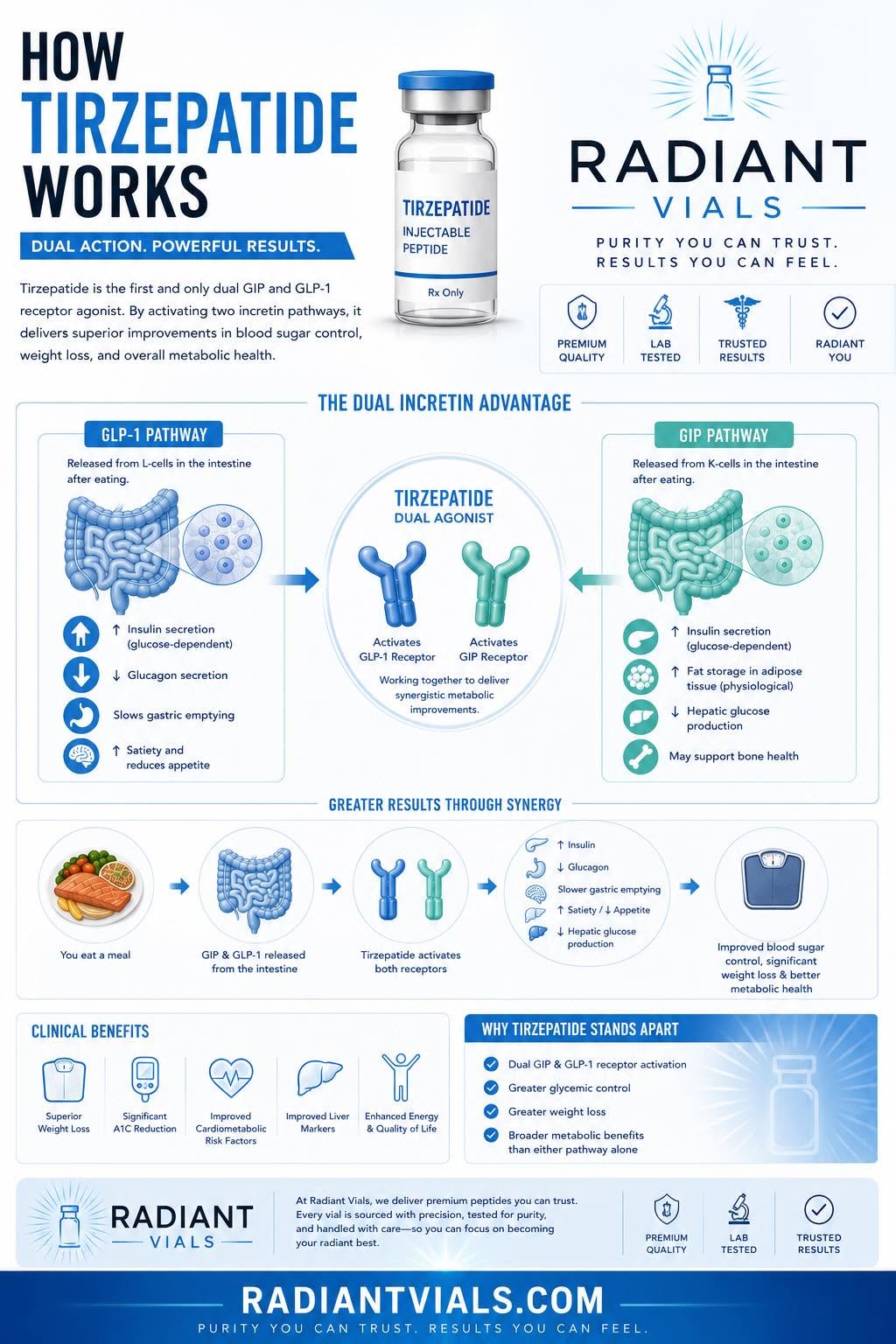
Tirzepatide is a dual GIP and GLP-1 receptor agonist. It mimics two natural incretin hormones produced by the gut after eating to regulate blood sugar and appetite.
Unlike older medications such as Semaglutide, which only target GLP-1, Tirzepatide acts on both pathways at the same time. This dual-pathway activity is discussed for its synergistic effect across appetite signaling, digestion timing, glucose control, and fat-tissue metabolism.
It signals the brain's satiety centers to reduce appetite, curb food cravings, and support a faster, longer-lasting feeling of fullness.
It delays gastric emptying, or the rate at which food leaves the stomach. This physical delay contributes heavily to a prolonged feeling of fullness after eating.
It stimulates insulin secretion in a glucose-dependent manner, meaning primarily when blood sugar is high, and suppresses glucagon release to help limit unnecessary sugar output from the liver.
The added GIP component is thought to improve adipose tissue function, enhance insulin sensitivity, and influence how the body stores and utilizes lipids.
By addressing blood glucose stabilization and central appetite suppression at the same time, Tirzepatide is associated with lower HbA1c and significant weight reduction in metabolic research and clinical discussions.
This article is educational and research-focused. It is not medical advice, dosing guidance, or a recommendation for personal use.
A focused overview of Nicotinamide Adenine Dinucleotide, cellular respiration, NAD+ and NADH cycling, ATP production, and mitochondrial energy metabolism.
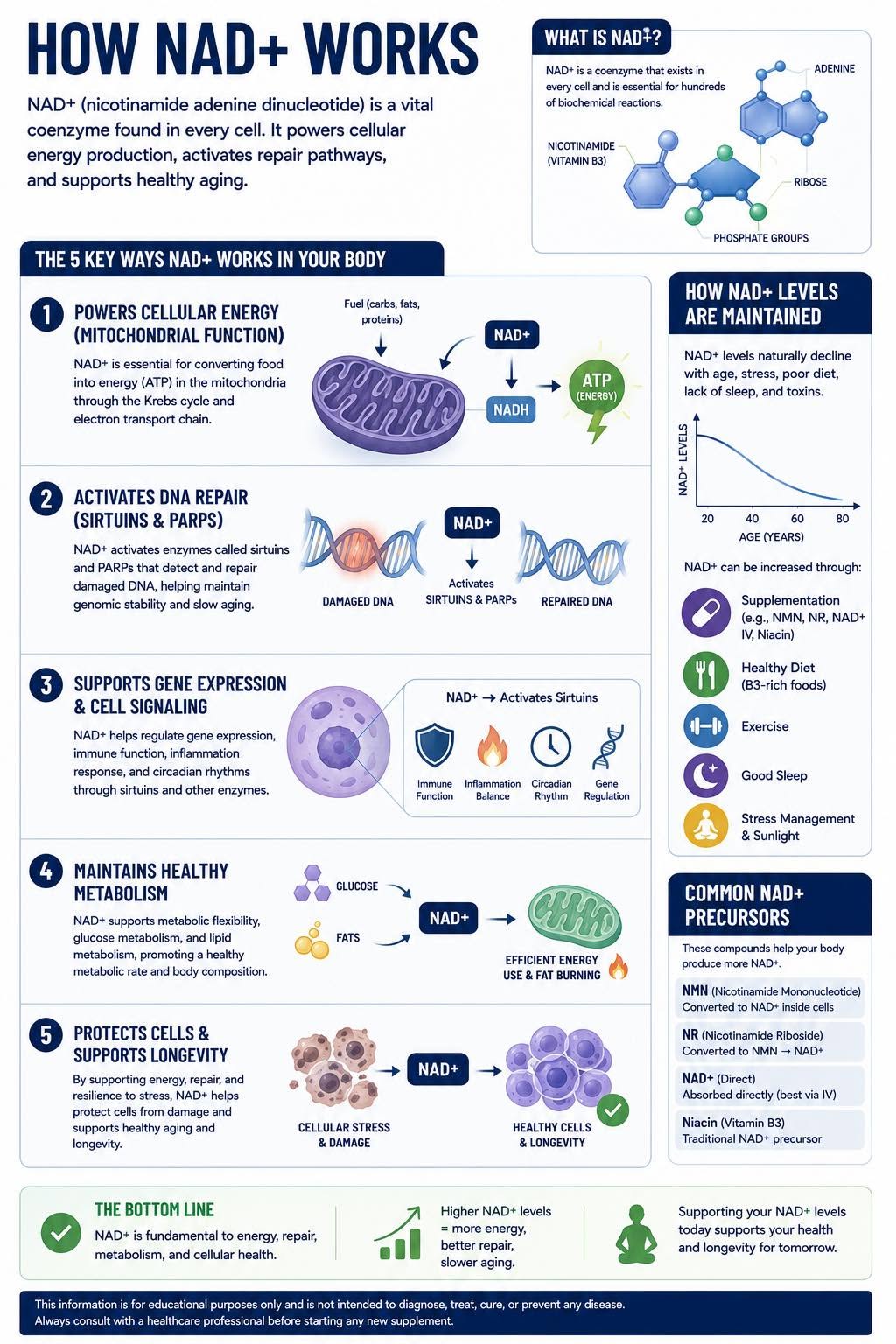
NAD+, or Nicotinamide Adenine Dinucleotide, is a critical coenzyme found in every cell of the body. In energy-metabolism research, it is often described as a microscopic delivery system that helps move usable energy through cellular pathways.
Cells generate energy through cellular respiration, a process centered in the mitochondria. NAD+ is one of the essential vehicles that keeps that process moving.
When food is broken down, NAD+ accepts electrons and hydrogen from those nutrients and converts into NADH, carrying that energy-rich payload toward the mitochondria.
NADH delivers high-energy electrons into the mitochondrial electron transport chain. After releasing its cargo, it converts back into NAD+ so the cycle can continue.
This electron transfer helps power ATP production. ATP, or Adenosine Triphosphate, is the chemical energy currency cells use for muscle contraction, cognition, breathing, and other basic functions.
When NAD+ availability is insufficient, the cellular production line can slow down and ATP output may decline. Research discussions often connect this bottleneck with fatigue, lower metabolic efficiency, and reduced mitochondrial performance.
Age, stress, poor sleep, and metabolic strain are commonly discussed in relation to declining NAD+ levels. Increasing NAD+ availability is studied for its potential to support mitochondrial efficiency, cellular repair pathways, and oxidative-stress resilience.
More available NAD+ may give the cellular production line more delivery capacity, helping mitochondria burn fuel efficiently and support ATP production.
NAD+ is tied to DNA repair and oxidative-stress pathways. When cells spend less effort managing baseline damage, energy regulation may become more efficient.
The brain is highly energy-demanding, so ATP production and mitochondrial performance are often discussed alongside focus, cognition, and reduced brain fog.
NAD+ helps fuel sirtuins, a family of proteins involved in cellular health, aging biology, and metabolic efficiency research.
A practical research note: straight oral NAD+ is often discussed as inefficient because the molecule is large and fragile. Smaller precursor molecules such as NMN, or Nicotinamide Mononucleotide, and NR, or Nicotinamide Riboside, are commonly studied because the body can absorb and convert them into NAD+ internally.
This article is educational and research-focused. It is not medical advice, dosing guidance, or a recommendation for personal use. Always consult with a qualified healthcare professional before introducing new peptides or supplements into a personal routine.
A focused overview of Bremelanotide, melanocortin receptor activation, hypothalamus signaling, and central nervous system arousal pathways.
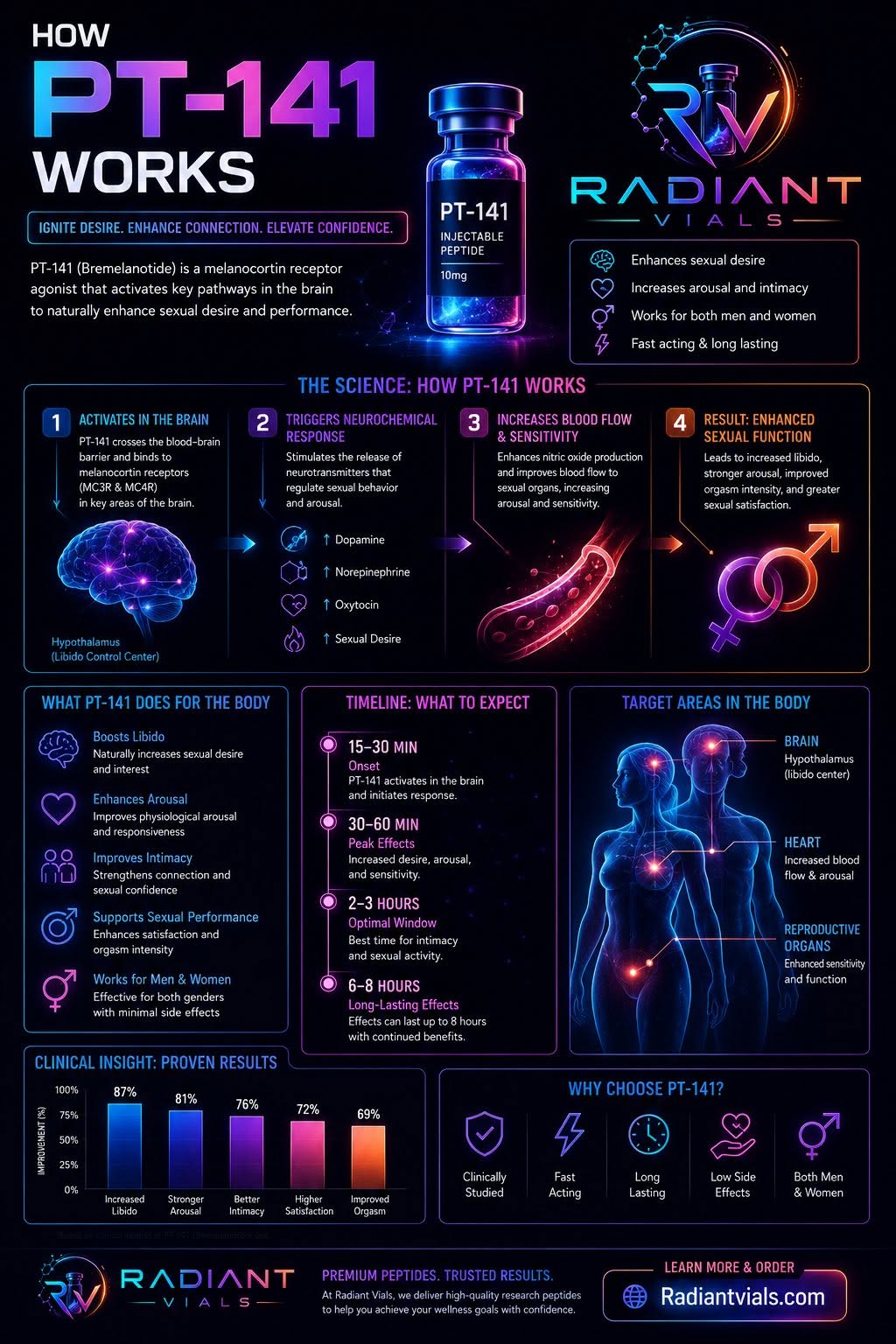
PT-141, also known as Bremelanotide, is a synthetic peptide that has gained importance in clinical medicine because it approaches sexual dysfunction through central nervous system signaling rather than the local vascular system.
Traditional erectile dysfunction therapies, including PDE5 inhibitors such as Viagra or Cialis, focus on the vascular system by increasing blood flow directly to tissues. PT-141 works differently: it is a synthetic peptide analog of alpha-MSH, or alpha-melanocyte-stimulating hormone, and targets brain signaling rather than the body's vascular plumbing.
PT-141 acts as a non-selective agonist of melanocortin receptors, with research attention centered on MC3R and MC4R receptors in the central nervous system.
By binding to these receptors, it can stimulate the hypothalamus, a brain region involved in autonomic regulation, metabolic processes, and primal drives.
Instead of forcing mechanical blood flow, PT-141 alters downstream neural signaling tied to sexual desire, libido, and arousal directly from the brain.
PT-141 represents a significant shift in how sexual dysfunction is addressed clinically because it targets libido and neural arousal pathways rather than anatomy-specific vascular mechanisms. Under the generic name Bremelanotide and the brand name Vyleesi, it received FDA approval for treatment of acquired, generalized hypoactive sexual desire disorder, or HSDD, in premenopausal women.
It is also discussed as an alternative pathway for individuals who do not respond to PDE5 inhibitors or who cannot safely use those medications because of cardiovascular considerations, including nitrate medication use where blood-pressure effects may create serious risk.
This article is educational and research-focused. It is not medical advice, dosing guidance, or a recommendation for personal use.
A practical publishing structure for turning this blog into an authority section over time.
Each future article should use one primary keyword, one clear H1, descriptive H2 sections, internal links back to the catalog, and a short FAQ block for long-tail searches.
Group metabolic, recovery, mitochondrial, copper peptide, and handling articles so search engines can understand topical relationships across the site.
Use consistent notes about HPLC purity, third-party testing, COA review, storage, and research-only use to reinforce expertise without making medical claims.
Do not publish dosing guidance, treatment claims, or personal-use instructions. Content should remain educational and limited to laboratory research contexts.